



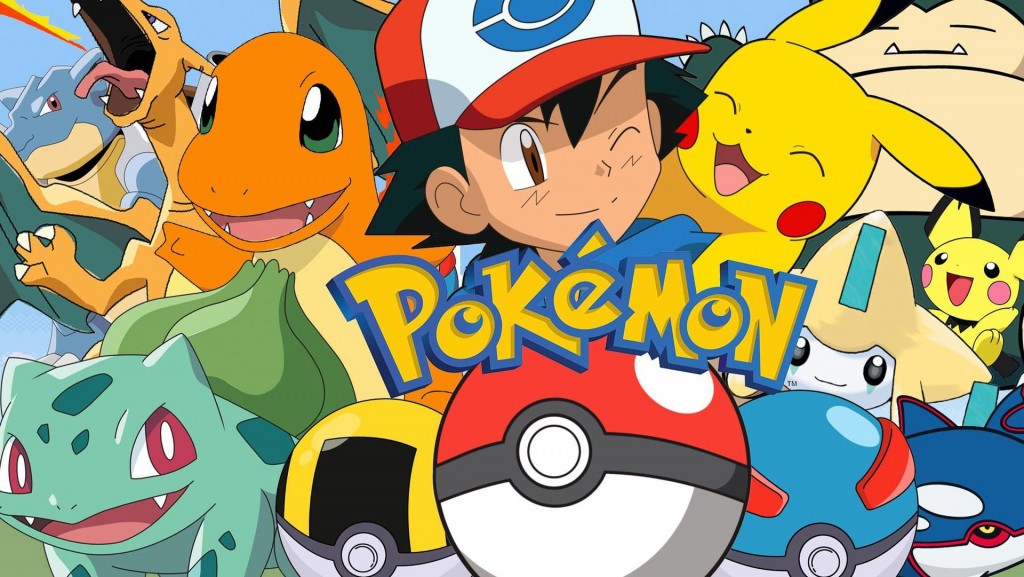
Pokemons – colorful and very fun fictional heroes and fighters living in the Pokemon world. Born in 1995 as computer game characters.
Their creator Satoshi Tajiri presented a conceptual version of the game, inspired by his childhood hobby of collecting various insects and bugs.
The scale of Pokemon's popularity is hard to comprehend – today, 23 movies have been released, countless games for Nintendo consoles, manga comics, amusement parks, series, toys, promotional items – caps, stickers, leaflets, and more.
Best online casinos offering games:
Pokemon game
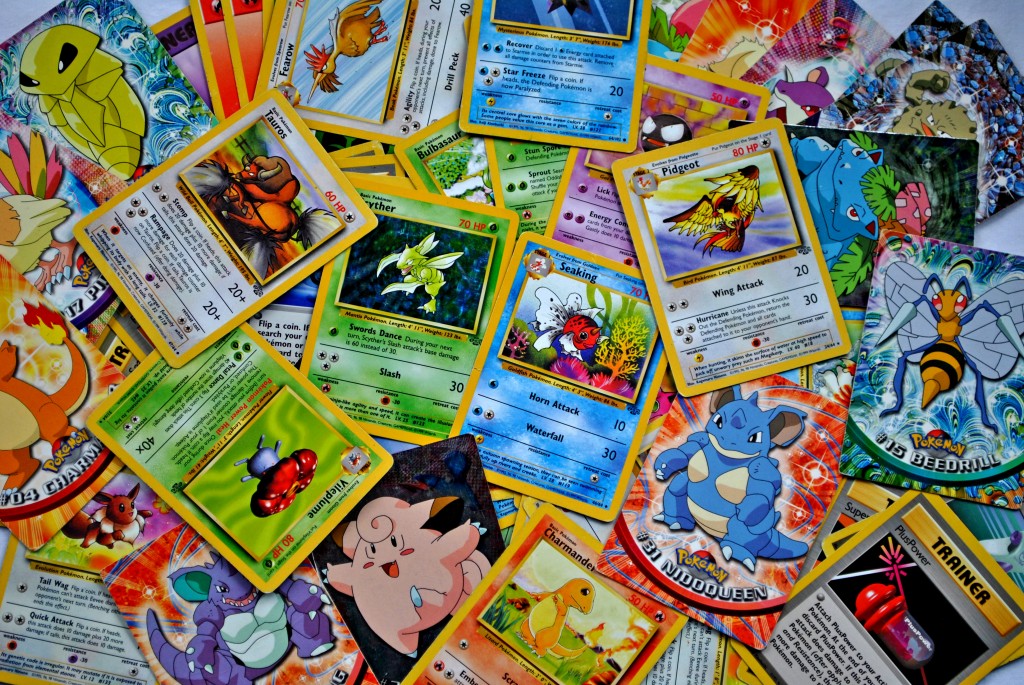
Pokemon cards
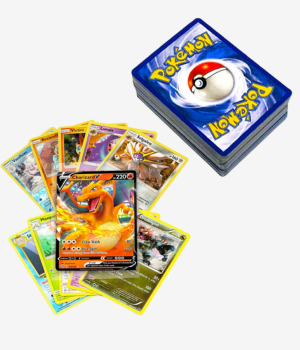
There are three types of cards in the game:
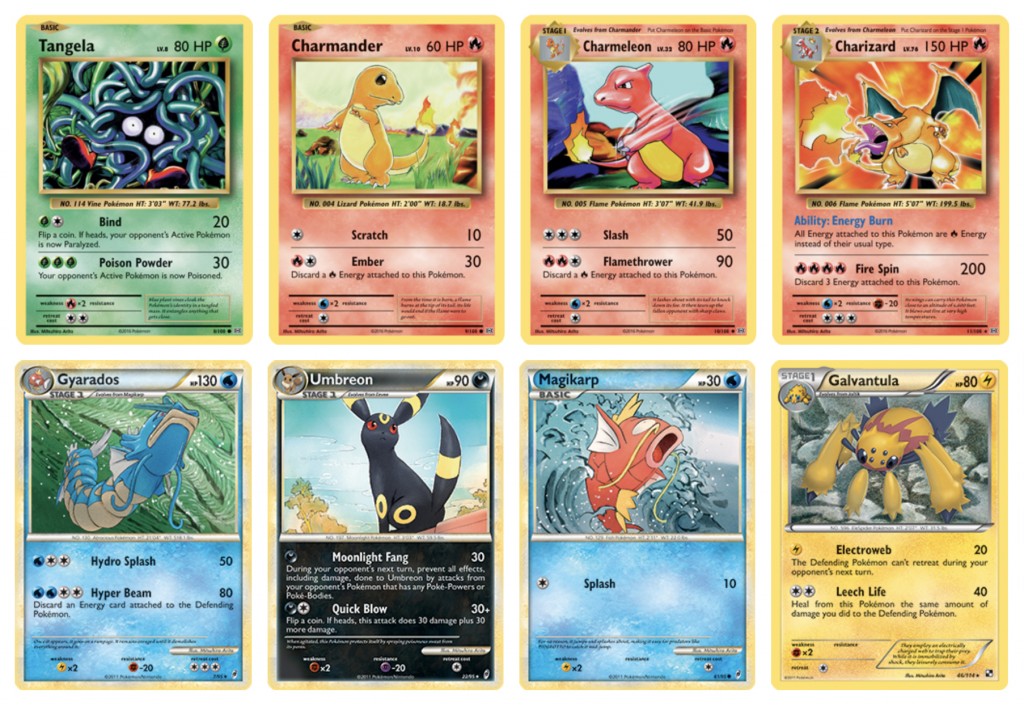
- Pokemons. You probably guessed it, these are the most important cards in the game! Most of these cards are Basic Pokemon, Stage 1 Pokemon, or Stage 2 Pokemon. The latter two types of cards are also called Evolution cards. The card type is indicated in the upper left corner of the card.
- Energy cards. Usually, a Pokemon cannot attack without Energy Cards, so you will need to match them with the special energy symbol on the Pokemon.
Pokemon energy types
One Pokemon defeats another by attacking or using special abilities. To attack, Pokemons must have special energy cards.
There are 11 different types of energy cards, from which the player chooses the type that best represents their Pokemon.
- Grass. Grass-type attacks heal the Pokemon or poison the opponent.
- Fire. A powerful attack that burns opponents! After the attack, some time must pass for the fire energy to be usable again.
- Water. Water-type Pokemon can manipulate their energy and act in another team.
- Lightning. This attack can return used energy from the discard pile. It can also leave opponents paralyzed.
- Psychic. A special attack that leaves opponents asleep, confused, and poisoned.
- Fighting. Fighting-type Pokemon can take greater risks and cause additional damage. Some can even flip coins.
- Darkness. The darkness energy type is known for its sneaky attacks, often causing opponents to discard their cards!
- Metal. This type of Pokemon can resist attacks longer than most others.
- Fairy. Fairy energy has tricks that help weaken opponents' attacks.
- Dragon. These are very strong attack Pokemons, requiring two types of energy to function.
- Colorless. Colorless energy Pokemon can perform many actions and work with any deck.
3. Trainer cards. These cards represent special items, helpers, and battlefields that the player can use in battle. The specific subtype of training is found in the upper right corner of the card.
Pokemons – game zones
Main hand. Each player draws 7 cards at the start of the game and keeps their cards hidden. Players cannot look at their opponent's cards unless instructed to do so by a card.
Prize cards. These are 6 face-down cards that each player places next to their main cards. These cards are chosen randomly, and no one can look at them until the game starts.
You can take this card as a prize when you knock out an opponent's Pokemon, and the one who takes their last prize card becomes the winner!
Deck. To start the game, each player must have 60 cards. Although both players know how many cards are in each deck, no one can look at or change the order of the cards in either player's deck unless instructed to do so by a card.
Discard Pile. Cards removed from the game go to the discard pile unless played otherwise. Usually, when a Pokemon is knocked out, it and all attached cards (e.g., energy cards) are sent to their owner's discard pile.
In Play. Each player has one play area, divided into two parts:
- Active Pokemon. The upper part of the play area is for the Active Pokemon. Each player can have only one Active Pokemon at a time and starts the game with it. If your opponent has no more Pokemons – you win the game.
- Pokemon Bench. The lower part of the play area is for Benched Pokemon. Each player can have up to 5 Benched Pokemons at a time. Any Pokemon played, except the Active Pokemon, must be on the bench.
How to play with Pokemon cards?
Ways to Win:
- Collect all prize cards.
- Defeat all opponents by playing with Pokémon.
- Win if the opponent has no cards during their turn.
Preparation:
- Shake hands with your opponent.
- Flip a coin. The winner decides which player will start the turn.
- Shuffle your 60-card deck and draw 7 cards.
- Check if you have a Basic Pokémon in your hand. If you don't have such a Pokémon among the drawn cards, show your cards to your opponent, shuffle the deck again, and draw anew. Repeat until you have at least one Basic Pokémon in your hand. Additionally, each time the opponent shuffles their cards because they don't have a Pokémon, you get to draw one extra card.
- Place 1 Basic Pokémon in the Active Pokémon spot.
- Place up to 5 more face-down Basic Pokémon on the “bench.”
- Place 6 face-down top cards of the deck aside. These cards will become the prize cards.
- Both players reveal their Active Pokémon and the Pokémon on the bench and start the game!
Turns:
Each turn has 3 main parts:
- Drawing a card
- Actions (optional but possible)
- Attack – attack and end your turn. The attack consists of 3 parts.
Drawing a card
The Pokémon game starts by drawing a card. If you don't have the necessary card to draw at the beginning of the turn, the game ends and the opponent wins.
Actions
A. “Bench” your Basic Pokémon cards.
Choose a card and place it face-up on the Pokémon bench. The bench can hold 5 Pokémon, so you can only perform this action if there are 4 or fewer Pokémon on the bench.
B. Evolve your Pokémon.
If you have a card that says “Evolves from X,” and that X is the name of a Pokémon you have in your hand, you can place your Evolution card on top of the card. This action is called evolving the Pokémon.
A “Basic” Pokémon can evolve to “Stage 1,” and the latter to “Stage 2” Pokémon. When a card evolves, all previously attached cards (energy, evolutions, etc.) and all previously inflicted damage remain with it. Other effects and special conditions (see the Special Conditions section) “Asleep,” “Confused,” and “Poisoned” cease to apply. Additionally, the evolved Pokémon can no longer use its previous abilities unless otherwise stated on the card.
Important! You cannot evolve a card on the first turn. A Pokémon that has evolved once cannot evolve again.
C. Attach an Energy card to a suitable Pokémon.
Choose a suitable Energy card and place it under your Active Pokémon or a Pokémon on the bench. An Energy card can only be used once per turn.
D. Use Trainer cards.
When playing with Trainer cards, perform all actions indicated at the bottom of the card. The used card is set aside.
Important! Only one Trainer card can be played at a time. You cannot play the same named card twice. Only one card is played per turn.
E. Retreat with the Active Pokémon.
If your Pokémon has taken a lot of damage, it is recommended to retreat and replace the Pokémon with a new one sitting on the bench. To retreat with the Active Pokémon, you need to remove as many Energy cards from it as indicated on the card, and if there are none, the retreat is free.
Important! “Paralyzed” and “Asleep” Pokémon cannot retreat. When switching cards, some damage or special properties may disappear. When you switch cards, you can continue the attack during the same turn.
F. Use Pokémon abilities.
Some Pokémon have special abilities that they can use. Many of them can be used even before the attack. Each ability is different, so read carefully how each one works – some are always active, while others activate only after certain special actions.
Additionally, don't forget to announce which abilities you will use so that your opponent knows what actions to take.
Important! Abilities are not the same as attacks, so don't forget to attack after using an ability!
Attack! Attack and end your turn.
Before attacking, make sure you have performed all the desired actions in the 2nd stage, as you won't be able to go back!
A. Check the Active Pokémon's energy.
Before attacking, check if your Active Pokémon has enough Energy cards for the attack. You can only attack if your Pokémon has as many Energy stars as required for the attack, for example, if the attack requires ***, your Pokémon must have that many ***.
B. Check your opponent's Pokémon's weaknesses and resistances.
Some Pokémon have specific type weaknesses or resistances, which are marked in the bottom left corner of the card.
If an attack deals damage, your opponent's active Pokémon will take even more damage if it has a weakness and will become less vulnerable if it has resistance.
Important! Weaknesses and resistances do not apply to Pokémon sitting on the bench.
C. Mark your opponent's cards with damage counters.
For every ten damage dealt, place one damage counter on your opponent's Active Pokémon. The amount of damage dealt is written to the right of the attack name. Additionally, remember to perform all actions required by the attack!
When the attack is finished, don't forget to check if your opponent's Pokémon has been knocked out. Some attacks can knock out multiple Pokémon, and sometimes even defeat the attacking Pokémon. If the total damage dealt to a Pokémon equals or exceeds its hit points, that Pokémon is immediately knocked out of the game along with all cards attached to it.
If you win, you get to take one prize card. The player whose Pokémon was knocked out chooses a new active Pokémon from their bench. If your opponent cannot do this because their bench is empty, you win the game!
Also, if your opponent still has cards but you just took your last prize card, you also win the game!
Special Conditions
Sometimes certain special conditions must be met for another player to take a turn. Thus, some attacks affect the opponent's Pokémon, and it may become Asleep (angl. Asleep), Burned (angl. Burned), Confused (angl. Confused), Paralyzed (angl. Paralyzed) or Poisoned (angl. Poisoned).
These can only affect Active Pokémon, and once they move to the bench, the special conditions cease to apply.
Asleep. To make a Pokémon fall asleep, turn it clockwise. If a Pokémon is asleep, it cannot attack or retreat. To wake the Pokémon between turns, flip a coin – if heads, the Pokémon wakes up (turn the card to the right), if tails, it remains asleep.
Burned. This Pokémon takes damage between turns but can heal on its own. If a Pokémon is burned, place a burn marker on it, and as long as it has that marker, flip a coin at the end of each turn.
If you lose the flip, your burned Pokémon takes 2 damage counters (weakness and resistance do not apply here). Burn markers do not stack; instead, adding 1 to 2 markers removes the first 2, leaving only 1 marker.
Confused. Turn the Pokémon to show that it is confused. To attack with a confused Pokémon, you must also flip a coin – if you win, your confused Pokémon attacks as usual, but if you lose, the Pokémon takes 3 damage counters (weakness and resistance do not apply here).
Paralyzed. Turn the paralyzed Pokémon clockwise to show that it is paralyzed. If a Pokémon is paralyzed, it cannot attack or retreat. A paralyzed Pokémon recovers after the opponent's turn.
Poisoned. This Pokémon takes damage between turns. Place a poison marker on the poisoned Pokémon. As long as the Pokémon is poisoned, it takes one damage counter at the end of each turn (weakness and resistance do not apply here). In this case, markers also do not stack – receiving one removes the old marker.
Important!
All special conditions, except Asleep and Paralyzed, cease to apply when a Pokémon moves to the bench. Asleep, Paralyzed, and Confused Pokémon can replace each other, for example, a Pokémon was Asleep, then it got Confused and remained only Confused. Thus, at one time, a Pokémon can be Asleep, Poisoned, and Burned..
Interesting Facts About Pokémon Trading Cards
- “Charizard G Lv. X” is a powerful card.
One of the most powerful and best cards in the game is “Charizard G Lv. X”. It has the “Malevolent Fire” ability, allowing it to deal an impressive 150 damage.
- The original Charizard costs $18,000 at an eBay auction.
Who usually collects “Charizard”? It turns out, everyone. It is a lizard. It breathes fire like a dragon. It has wings. However, if you want to get the first Charizard trading card, you will have to spend a whopping $18,000 at an eBay auction.
- Saudi Arabia banned Pokémon cards.
Saudi Arabia banned the import of Pokémon cards into the country, saying they depict symbols related to Israel and that they are harmful to children.
- Pokémon encourages children to learn math.
When children play this game, it can help them understand basic math concepts. During battles, Pokémon can deal damage to another card's health, reducing its “HP”. To figure out how much “HP” is left, they have to perform certain calculations.
Once you know all the rules of the Pokémon trading card game, all that's left is to invite a good friend and dive into the adventure and excitement of the Pokémon world!
Additionally, the Pokémon trading card game is a collectible card game, so you can share cards with fans of the game, search for special cards, strategize, and build a very strong deck. And if you don't have physical cards yet, you can always try the Pokémon trading card game online!
More card games can be found here.