



There are many learning methods and everyone must choose the one that suits them best, i.e., some learn best by hearing, others by seeing, and others by doing, etc. According to learning methods, people can be divided into 4 types:
- Auditory – learns best when hearing information or speaking aloud, easily distracted by other sounds, there should be no extraneous sounds during learning.
- Visual – needs to focus on poker books, poker movies, or other visual aids (e.g., posters, graphs, tables, etc.).
- Practical – learns by doing, experiencing, the most emotional of all types, as they tend to experience everything themselves.
- Communicative – is a good listener and conversationalist, discussions help them better understand and assimilate information. Such people learn best in groups.
Learning methods for each type:
Auditory: participate in seminars, training programs, audiobooks, audio recordings, record yourself, your game, read aloud and repeat the material.
Visual: articles, books, graphs, tables, movies, educational poker videos, training programs, poker forums, take notes, summarize or rewrite.
Communicative: forums, discussions, etc., explain your game, your poker game strategies, discuss in live groups.
Practical: play, observe your game, analyze, artificially imagine situations, artificially induce experiences.
Combining different methods
You must combine and match different learning methods to maximize learning efficiency. For example, if you only learn by listening, you will lose 80% of the information. Those who can combine different methods, i.e., learn by hearing, seeing, writing, doing, and discussing, can assimilate up to 90% of the information.
Memory
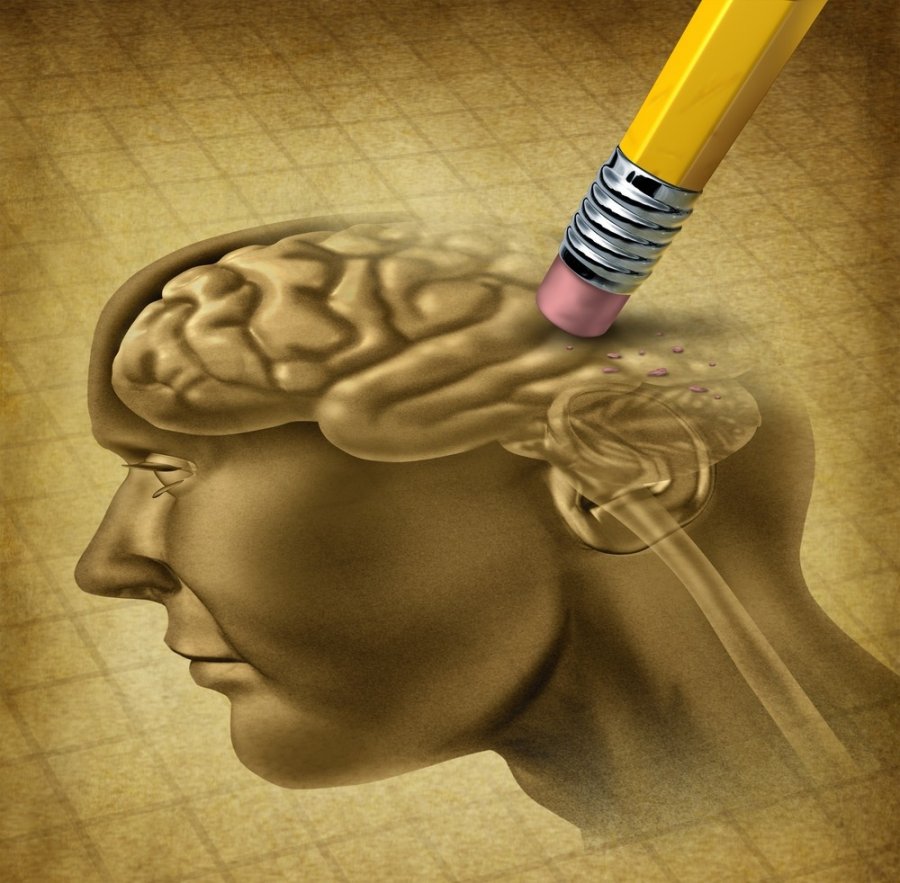
Memory is of 3 types: short-term, working, and long-term memory. The main goal in learning is to transfer information to long-term memory. Special techniques are used for each learning type, e.g., simple repetition, or emotions and feelings (artificially induced), help transfer information to long-term memory. To achieve good results and reach your set goals (qualitatively and quickly), a learning strategy is necessary. An effective learning strategy is essential for transferring information to long-term memory.
Some general tips for creating a learning strategy:
- When learning, it is very important to feel good, those who do not feel good do not learn well, good rest (sleep) is necessary, good food (proteins). Sleep and healthy nutrition guarantee the necessary amount of vitamins and proteins, which are essential for our nervous system to process information, maintain attention, be able to remember, etc., also, you should not feel hungry or overstuffed. Plan your learning, how much time and when to learn, when to take breaks, try to learn daily.
- Learn and work in a well-ventilated room (this is generally very important for your brain function and your mood), dressed in loose clothing,
- Breaks are very important because learning for a long time makes the body and mind unreceptive, and learning for too long results in the opposite effect.
- Take short breaks every 20-30 minutes, otherwise, most of the information will not be remembered or understood. ~ 5-minute breaks in this case are the best way to relieve the burden from the body and head.
- After 2-3 hours of work, you must take a long break, but not longer than 2 hours.
- Also remember that more than 6 hours of intense work per day is practically impossible.
- It is very important to repeat the material. Material viewed once remains in short-term memory. Planned and systematic repetitions are needed to transfer information to long-term memory.
- After the first reading of the material (or similar) – the information must be repeated the next day (a short repetition, just reviewing).
- Within 3-4 days, the material should be repeated again, more seriously, deeper than it was repeated the next day.
- Repeat the material after a month.
- The last repetition about half a year later almost guarantees the material's retention in long-term memory.
- When repeating, it is better to read different sections rather than everything in sequence at once.
- It is good to mix new information with already repeated material.
- It is very important to understand learning goals, the benefits in the long term, because sometimes problems arise, e.g., “bad beat problem”. Emotions affect a person more strongly than logical thinking, so negative emotions begin to dominate and bad play starts (going “on tilt”).
- It is very important to strive to demonstrate correct play, based on theoretical preparation, poker probabilities, mathematics, etc., rather than emotions or past events.
- It is very important to continue working on theoretical preparation, this is especially important when starting to play poorly (“tilt”).
- It is important to prepare and analyze your game, post your hands in forums or participate in discussions.