



Unfortunately, the GOP-controlled Rules Committee did not accept the FAIR BET Act as an amendment to the NDAA. This was an easy fix that should have been adopted. Nonetheless, I will continue to build support to restore the 100% gambling loss deduction.
– Dina Titus (@repdinatitus) September 9, 2025
The purpose of the FAIR BET Act
The FAIR BET Act, or the Fair Accounting for Betting Income Tax Act, sought to restore the old tax rules under which gamblers could deduct all their losses from their winnings.
However, under the new OBBB rules, players must pay taxes on “fictitious income”.
For example, a poker player can record $50,000 as taxable income if he won $150,000 but lost $100,000.
Under the new OBBB rule, they can only deduct 90% of their losses. This means that they will be taxed on $60,000.
This change could mean that professionals who make a lot of trades and experience large fluctuations will have to pay taxes on money they never had.
Representative Titus pushed for the inclusion of the FAIR BET Act in the National Defense Authorization Act (NDAA), and Senator Ted Cruz (R-Texas), a known poker enthusiast, supported it.
On the other hand, the Republican-led Rules Committee rejected the proposal.
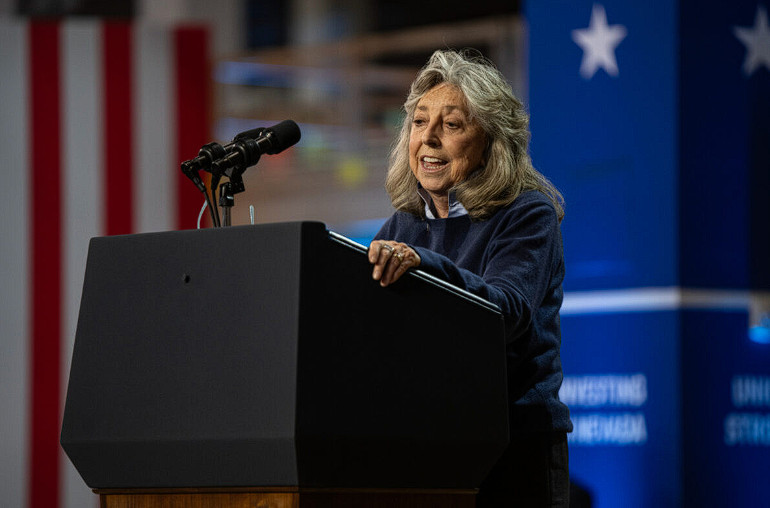
Political conflict over gambling taxes
Representative Titus took to X (formerly Twitter) to vent her anger and accused Republicans of blocking the proposed solution.
She also said that she would continue to work to get support to withdraw the bill.
However, not all Nevadans agree with her on this issue. Matthew Winterhawk, a Republican running for Governor, criticised Titus in a 46-second video.
He said that she is only interested in “gamblers and casinos” and that the government should not “support gambling”.
Winterhawk even compared gambling to heroin use, even though most US states allow gambling and the federal government prohibits drug use.
Nope. 👎🏻 fair bet act subsidizes gamblers. Period. pic.twitter.com/j9OeEkOgaQ-
Matthew Winterhawk (@W4Nevada) September 9, 2025
The poker community has stated that the FAIR BET Act is not about subsidies, but is about ensuring that those whose jobs depend on the game are taxed fairly.
Reaction from the poker community
The rejection of the FAIR BET Act has provoked a strong reaction from the poker world.
Phil Hellmuth, who has won several WSOP bracelets, called the provision a “death tax on poker players”.
Daniel Negreanu and Phil Galfond have also spoken out against the new tax policy, pointing out that it could be disastrous for the professional game of poker.
Tax experts such as Ray Kondler of Kondler CPAs argue that if the rule remains in place, it will have a significant impact on amateur and professional players.
Many professionals worry that higher taxes will reduce the number of people who want to play poker, which will hurt the US poker economy in the long run.
What's next for the gaming tax fight?
“The Fair Bet Act remains ineffective. It is unclear what Rep. Titus, but she has promised to continue to raise the issue in Congress.
Poker players and tax experts are still looking for an alternative solution until the new rules come into force.